Charakterystyka trasy
2019-08-26
Sulina
1637 km
6624 m
6458 m
578 h 3 min
4.0/6
Komentarze
NA TYCH TRASACH PRZYDA CI SIĘ MAPOPRZEWODNIK LUB MAPA Z NASZEJ APLIKACJI
MAPA TURYSTYCZNA W APLIKACJI TRASEO
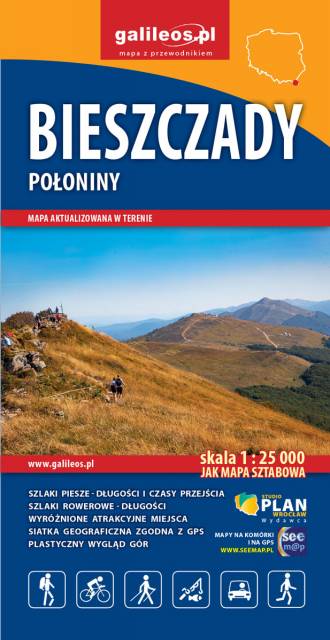
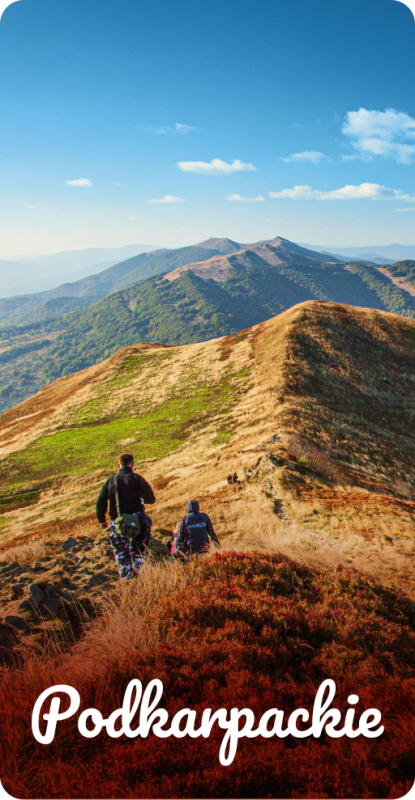
Bieszczady Polonynas
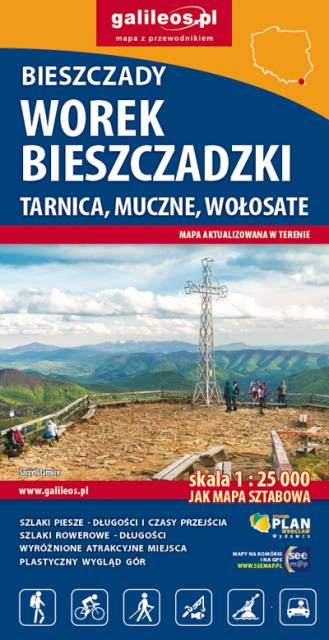
The map covers the most interesting mountain ranges of the Bieszczady Mountains. It includes all the polonynas: Wetlińska, Caryńska, Bukowska, Dźwinicka, Tarnica, Szeroki Wierch, Mała and Duży Rawka and the Jeleniowego Range (next to Muczne) with a newly built viewing tower. All the trails and educational paths are shown, with their lengths and walking times. Their lengths are given next to the cycling routes. In addition, all the information needed by tourists is marked on the map.
The descriptive part of the map, enriched with photographs, includes information about the mountain ranges and peaks and the towns located in the area.
MAPA TURYSTYCZNA W APLIKACJI TRASEO
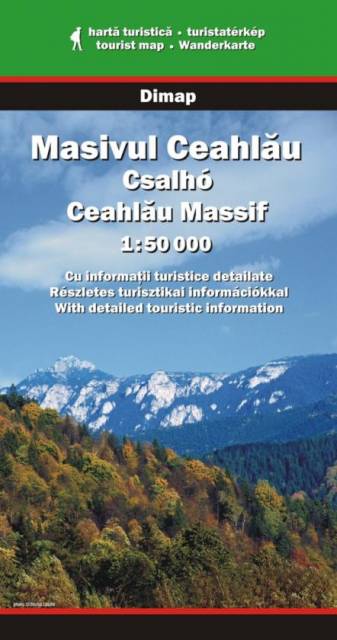
Ceahlău Massif
The Ceahlău Massif is one of the most famous mountains of Romania. It is part of the Bistriţa Mountains range of the Eastern Carpathians, in the Moldavia region. It is bounded to the east by the Bistriţa River and Lake Bicaz, to the south by the Bicaz River. From the south, the main access point is the village of Izvorul Muntelui, located 12 km north from the town of Bicaz. To the north, Mount Ceahlău is also accessible from Durău. Mount Ceahlău is a popular hiking destination in Romania, there are also ski slopes located at Durău.
Attention! There is a little calibration mistake on the map - e.g. 200 m relative to google maps.
MAPA TURYSTYCZNA W APLIKACJI TRASEO
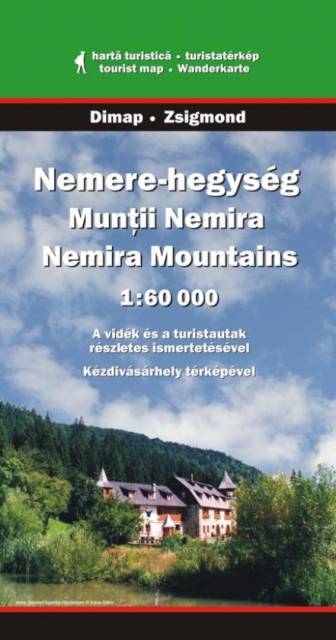
Nemira Mountains
Nemira Mountains are a group Moldo-Transylvanian Carpathian mountains, belonging to the Eastern Carpathian Mountains. The highest peak is peak Nemira Mare, with 1,649 m.
Nemira mountain routes attract lovers of mountain wilderness because of special landscapes and places. Less exploited in terms of tourism compared to other mountains and modest heights (the highest peak with 1649 m), Nemira Mountains offers tourists constantly surprise discovery of wonderful places. Access to the trails in the mountains Nemira can make Dărmăneşti (Sălătruc town, near the dam Poiana Uz), of Dofteana village of Slănic Moldova (of resorts and tourism staging area), the town Oituz (Poiana Sarata) from Oituz and Covasna (communes Wood Breţcu and Estelnic). Nemira Mountains are part of the central group of the Eastern Carpathians, marking its southern end, and sedimentation falls in the eastern mountains. (wikimapia.org)
Attention! There is a little calibration mistake on the map - e.g. 200 m relative to google maps.
MAPA TURYSTYCZNA W APLIKACJI TRASEO
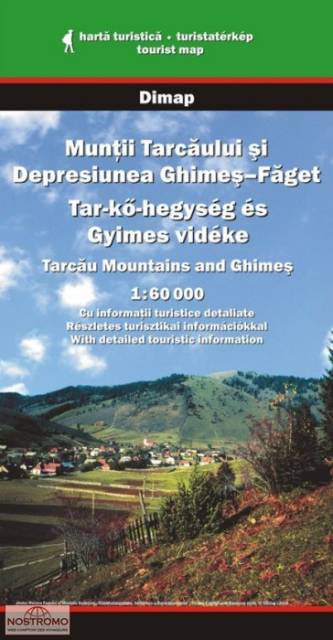
Tarcău Mountains and Ghimeș
The Tarcău Mountains are a mountain range in north-eastern Romania, they are part of the Moldavian-Muntenian Carpathians of the Outer Eastern Carpathians. The range is bordered by the Bicaz and the Bistriţa river to the North; the Dămuc and Valea Rece river to the West, the Trotuş river to the South. To the East they are limited by the subcarpathian hills along a line running approximatively from Piatra Neamţ to Moinești. The highest point is Tar-havas at 1663 meters. (wikipedia.org)
Attention! There is a little calibration mistake on the map - e.g. 200 m relative to google maps.
MAPA TURYSTYCZNA W APLIKACJI TRASEO
Parâng Mountains
Parâng Mountains are one of the highest mountain ridges in Romania and Southern Carpathians, with its highest peak Parângu Mare reaching 2,519 m. They are located in the south-western part of the Central-Meridional Carpathians. They are the tallest mountains from the local Parang-Cindrel mountain group and the second largest mountains in the Romanian Carpathians after the Făgăraș Mountains. They are situated between the Șureanu Mountains (north), Latoritei Mountains (north-east), Căpățânii Mountains (east), Vâlcan mountains (west) and the Petroşani Depression in the north-west. Located south and east of the city of Petroşani, the Parâng Mountains form the eastern barrier of the Jiu Valley (a plateau 100 kilometers long from east to west and 70-80 kilometers wide from north to south).