Section 2 of the Drauradweg cycle route invites cyclists on a peaceful yet engaging ride through the heart of Austria’s Upper Drautal valley. Stretching from the sunny town of Lienz to the cultural centre of Spittal an der Drau, this section offers an easy to moderate, delightful combination of Alpine scenery, river landscapes and historical exploration. With its well-maintained, mostly paved route and a variety of attractions, it is perfect for both occasional cyclists, families with children and active explorers looking for a day full of discovery and charm.
What is the Drauradweg cycle route?
The Drauradweg (also known as Drau Cycle Path) is a famous long-distance cycling route connecting 4 countries: Italy, Austria, Slovenia and Croatia. This picturesque route follows the Drau River, offering cyclists a full experience of the true beauty of nature, landscapes diversity, and chance to explore historical landmarks, as well as the opportunity to experience local culture and regional cuisine. The route is mostly flat and well-marked, making it accessible for cyclists of all levels, including families and beginners, as well as cyclists looking for more challenging adventure on diverse terrains. The Drauradweg offers an enriching cycling experience and the opportunity to explore multiple countries, makeing it an excellent choice for cycling enthusiasts.
What is the total length of the Drauradweg cycle route, and how long is its second section?
The Drauradweg (Drau Cycle Path) stretches for approximately 510 kilometers (317 miles) from Toblach (Dobbiaco) in Italy, through Austria, to Slovenia and ending in Varaždin in Croatia, along the Drau River. The entire route is divided into 7 smaller sections.
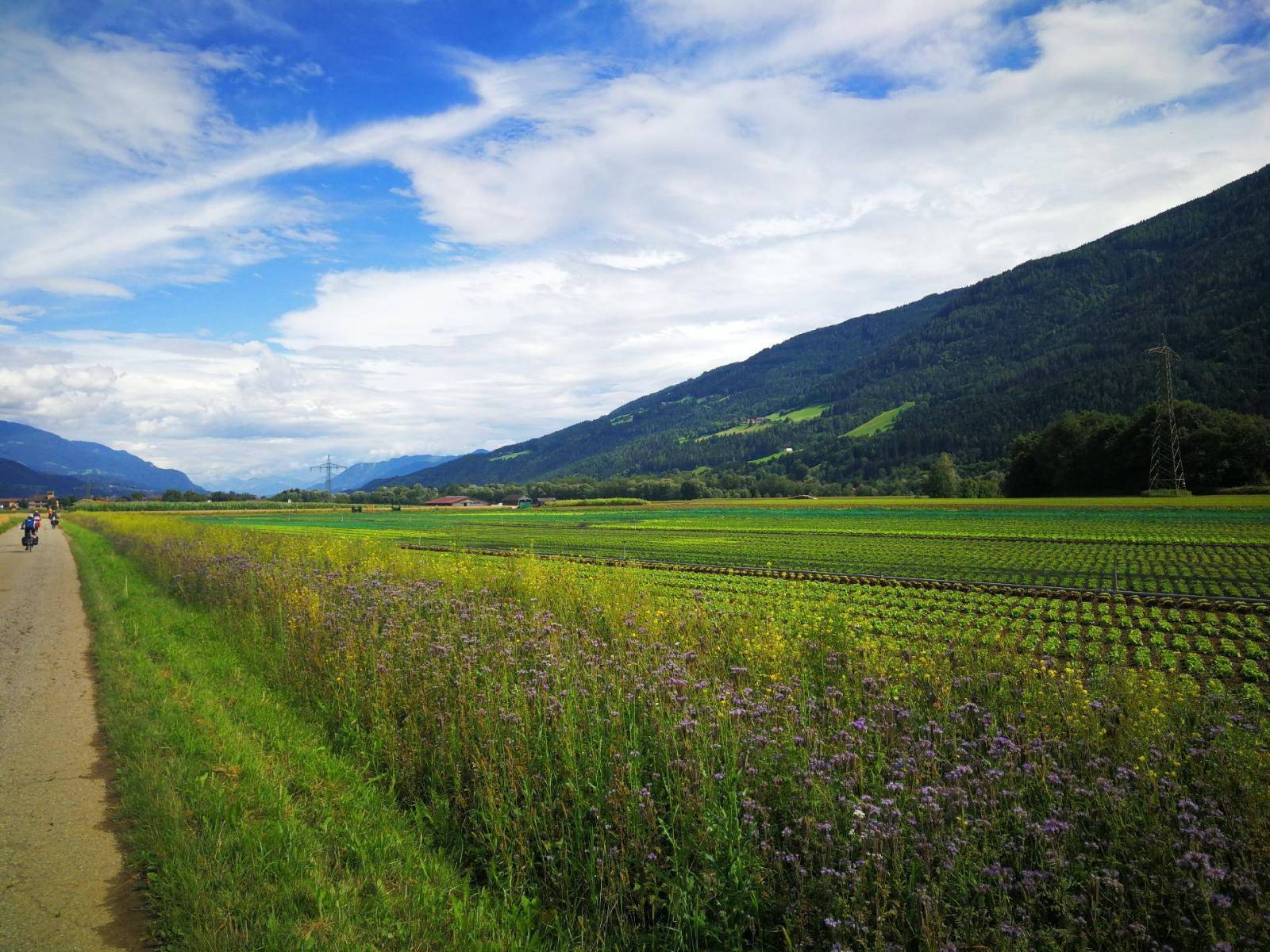
The second section of the Drauradweg cycle route spans approximately 76.6 km (47.6 miles), stretching from Lienz to Spittal an der Drau in Austria. This section offers a lovey journey through the Upper Drau Valley, characterized by its gentle slopes and picturesque landscapes, providing a pleasant ride.
How long does it take to cycle the entire Drauradweg cycle route, and how long does it take to complete its second section?
Cycling the entire Drauradweg (Drau Cycle Path) usually takes between 5 to 7 days, depending on your fitness level, pace, and time spend exploring along the route. The entire 510-kilometer route has already been divided into 7 smaller sections that most cyclists can complete in one day, making the journey and its planning as easy as possible. Cyclists who prefer a more leisurely pace can complete this route in around 5 days, covering an average of around 102 kilometers per day.
The second section of the Drauradweg cycle route from Lienz to Spittal an der Drau in Austria usually takes between 4 to 5.5 hours to complete. Although most of this section of the route is flat, paved and accessible, there are short segments of unpaved surfaces where less experienced cyclists may need to temporarily get off their bikes.
What attractions are worth seeing on this section of the Drauradweg route?
Section 2 of the Drauradweg cycle route offers many of attractions worth exploring along the way, such as:
Aguntum Archaeological Site
Located near Lienz, Aguntum is the only Roman town in Tyrol. Cyclists can take a short detour to visit this site, which features reconstructed ruins of villas and thermal baths, and a museum displaying artifacts from the Roman era.
Drauoase Dellach
Dellach is a charming village along the route where cyclists can stop to enjoy the peaceful surroundings. The area offers opportunities for relaxation and a closer contact with nature.
Ochsenschlucht Gorge
Near Berg im Drautal, the Ochsenschlucht Gorge offers picturesque natural surroundings. Cyclists can take a short hike to explore this narrow, winding gorge, which offers stunning views and a peaceful atmosphere.
Historic Churches
Spittal an der Drau is home to several historic churches, including the Spittal Protestant Church, a stunning example of Renaissance architecture, and the Muri Church, a Romanesque gem dating back to the 13th century.
Schloss Porcia
Located in Spittal an der Drau, it is one of the most important Renaissance buildings outside Italy. Constructed in the 16th century, the castle boasts Italian palazzo-style architecture and houses the Museum für Volkskultur, which displays over 20,000 exhibits related to the cultural history of the region.