

Traseo_Official_RoutesTraseo_Official_Routes
3.3/6
Charakterystyka trasy
2025-07-27

Długość trasy:
426 kmSuma przewyższeń:
0 mSuma spadków:
0 mOcena trasy:
3.3/6Map of the EuroVelo 6: Nantes to Orlean
The EuroVelo 6 cycle route from Nantes to Orléans is one of the most iconic sections of the “Rivers Route” that stretches from the Atlantic to the Black Sea. This particular stretch, approximately 360 km long, runs through the Loire Valley, a UNESCO World Heritage site, showcasing the essence of French culture, architecture, wine and riverside serenity. Along the way, cyclists pass through charming cities and villages such as Ancenis, Angers, Saumur, Chinon, Tours, Amboise, Blois and finally Orléans.
The entire EuroVelo 6 route spans approximately 3,600 km and passes through 10 countries such as France, Switzerland, Germany, Austria, Slovakia, Hungary, Serbia, Croatia, Bulgaria, Romania, making it one of Europe’s longest and most diverse cycling journeys.
Route, attractions
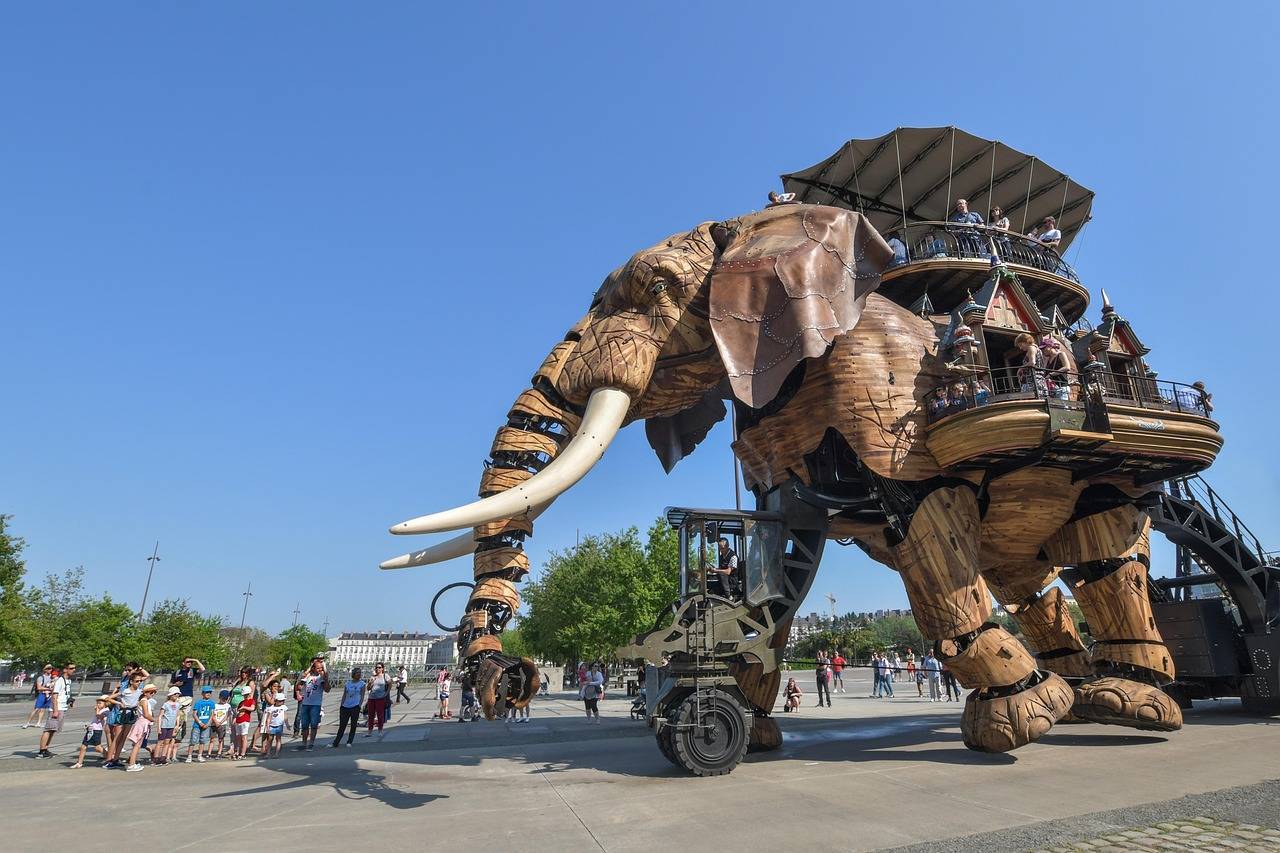
Starting the journey in Nantes, a vibrant city that blends art, history and innovation, cyclists can explore attractions like the surreal mechanical creatures at Les Machines de l’île, or stroll through the historic Château des Ducs de Bretagne before heading eastward along the calm banks of the Loire. These attractions are located within the city, just a short deviation of 1–2 km from the marked EV6 route through Nantes. The Château des Ducs de Bretagne lies about 6 minutes by bike from the Passerelle Victor Schoelcher footbridge, which is part of the EV6 route across the Loire.
The route quickly transitions into quieter countryside and riverbanks as it approaches Ancenis, a charming riverside town with a medieval castle, cobbled streets, and panoramic views of the Loire. Just next to the bridge over the Loire stands the Château d’Ancenis, a beautifully preserved castle worth a short detour.
The route then leads cyclists along the quiet southern bank of the Loire, guiding them through peaceful villages and scenic levees as it enters Les Ponts-de-Cé — a charming commune stretched across several river islands. The path here offers beautiful views over the water, framed by historic bridges and lush riverbanks dotted with poplars and willows. It’s a tranquil stretch, perfect for cruising in silence with the river just beside you.
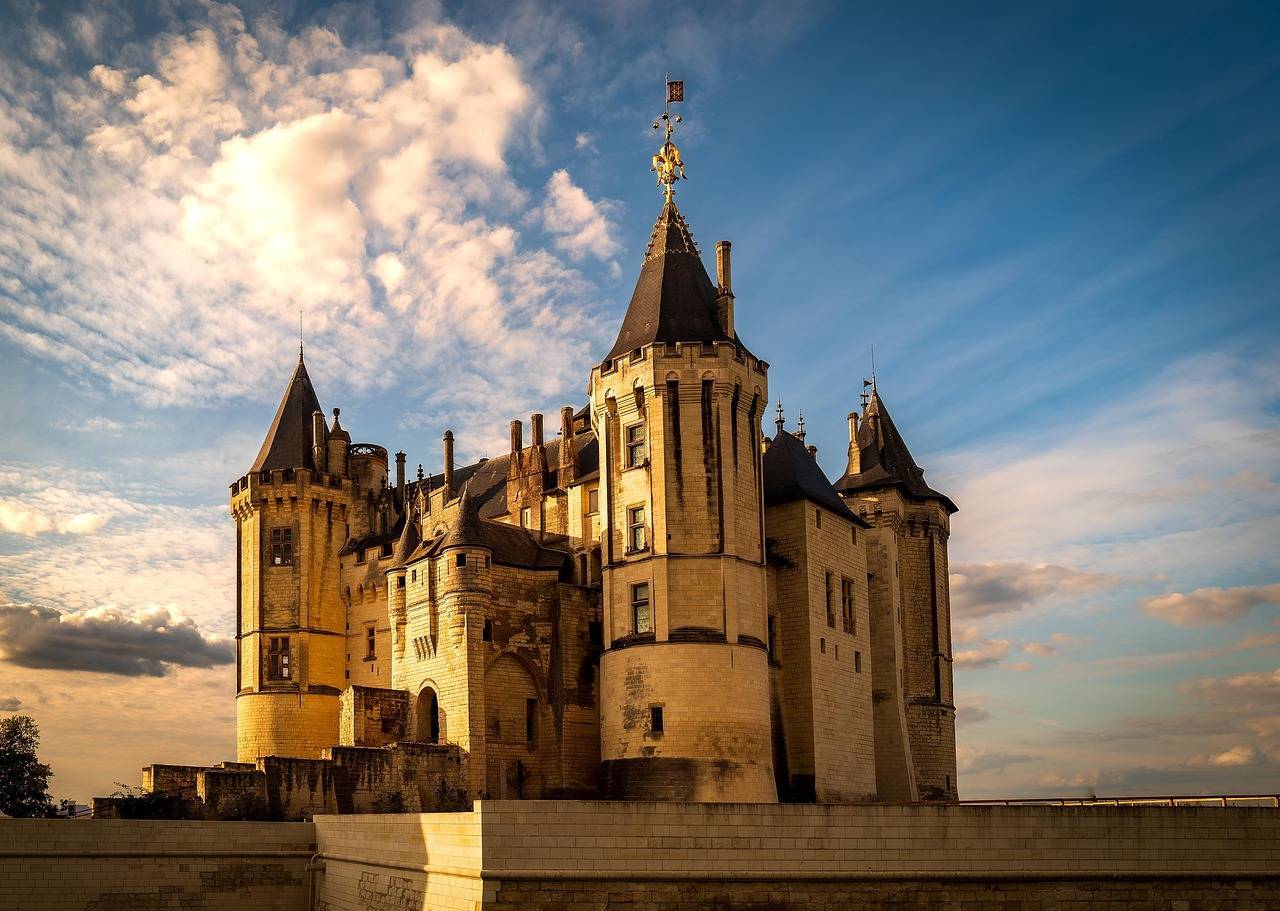
The route continues to Saumur, famed for its white limestone architecture, the equestrian tradition of Cadre Noir, and its numerous underground wine cellars. The local sparkling wine here is a must-try. Above the town, the fairytale-like Château de Saumur offers panoramic views over the Loire. No detour necessary – Saumur is directly on the trail, and the château is located above the town centre, easily reachable on bike.
The road then gently guides riders to Tours, the largest city along the route. With lively squares, ancient timbered buildings, a gothic cathedral, and bustling markets, it’s a natural place to rest and recharge. Tours is also a base for exploring nearby castles such as Villandry and Azay-le-Rideau.
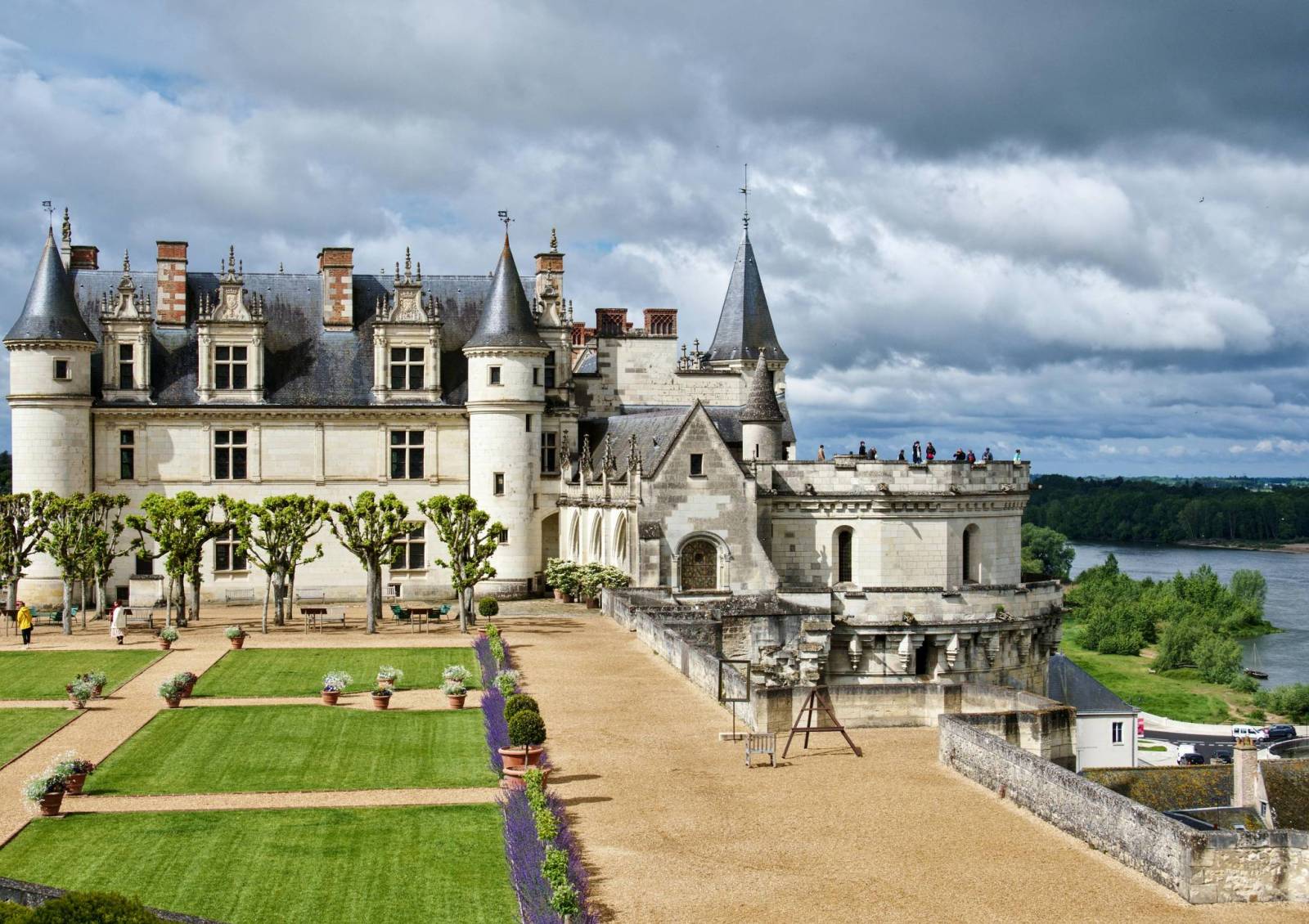
Next, Amboise appears with its Renaissance charm and the impressive Château d’Amboise, once the home of French kings. Nearby, Clos Lucé – the final residence of Leonardo da Vinci – offers a blend of art, science and garden tranquillity. Both sites lie in the centre of Amboise, directly on or very close to the route.
As the route passes Blois, it gently follows the tranquil banks of the Loire without entering the town center.
Just a short detour across the Pont Jacques-Gabriel and a 1 km ride inland will bring you to the magnificent Château Royal de Blois, a stunning testament to French Renaissance history.
The journey culminates in Orléans, a city steeped in medieval history, especially known for Joan of Arc, whose statue graces the main square. The grand Cathédrale Sainte-Croix and the Musée des Beaux-Arts offer a fitting cultural finale to the ride. The statue of Joan of Arc is located approximately 500–600 metres from the official EuroVelo 6 route, making it an easy detour into the heart of the historic city.
Route signage
This section of EuroVelo 6 is also part of the Loire à Vélo route, one of the best-developed cycle routes in France. It is clearly signposted with green and white signs marked “La Loire à Vélo” or EuroVelo 6. Navigation is straightforward, but a GPS or printed map can help in urban areas or when exploring side attractions like châteaux.
Level of difficulty
The route is mostly flat, with only occasional gentle slopes, making it accessible even to beginner cyclists and families. The surfaces are a mix of paved cycle paths, quiet country lanes, and river embankments, all generally well-maintained and safe.
Public transport
There is excellent train connectivity along the route. The entire route is served by the TER regional train network, which accepts bicycles—usually free of charge and without the need for a reservation. From Orléans, it’s easy to return to Nantes or continue on to Paris. However, it’s recommended to avoid peak travel hours and to check the timetable in advance, as some trains have a limited number of bike spaces.
_________________________________________________________________
EuroVelo 6: trasa z Nantes do Orléans
Odcinek trasy EuroVelo 6 z Nantes do Orléans to jedna z najbardziej malowniczych części słynnej „Trasy Rzek” prowadzącej od Atlantyku aż po Morze Czarne. Ten fragment, liczący około 360 km, przebiega przez Dolinę Loary – wpisaną na listę światowego dziedzictwa UNESCO – oferując podróż przez esencję francuskiej kultury, architektury, winiarstwa i rzecznych pejzaży. Po drodze rowerzyści odwiedzają urokliwe miasta i miasteczka, takie jak Ancenis, Saumur, Tours, Amboise, Blois i w końcu Orléans.
Cała trasa EuroVelo 6 ma długość około 3600 km i przebiega przez 10 krajów, m.in. Francję, Szwajcarię, Niemcy, Austrię, Słowację, Węgry, Serbię, Chorwację, Bułgarię i Rumunię, co czyni ją jedną z najdłuższych i najbardziej zróżnicowanych tras rowerowych w Europie.
Przebieg trasy, atrakcje
Wyprawa rozpoczyna się w Nantes – tętniącym życiem mieście, w którym nowoczesność splata się z historią i sztuką. Warto zobaczyć surrealistyczne mechaniczne stwory w Les Machines de l’île oraz zwiedzić historyczny Zamek Książąt Bretanii (Château des Ducs de Bretagne).Obie atrakcje znajdują się niedaleko oficjalnej trasy EV6 – zaledwie 1–2 km od mostu Passerelle Victor Schoelcher, który prowadzi rowerzystów przez Loarę.
Trasa szybko wyprowadza podróżników z miejskiego zgiełku w spokojniejsze krajobrazy nad Loarą, zbliżając się do Ancenis – uroczego miasteczka z brukowanymi uliczkami, zamkiem i widokiem na rzekę. Tuż przy moście nad Loarą znajduje się Château d’Ancenis – warty krótkiego przystanku.
Dalej trasa prowadzi południowym brzegiem Loary przez sielskie wioski i zielone wały rzeczne, docierając do Les Ponts-de-Cé – urokliwej miejscowości położonej na wyspach rzecznych. Widoki z trasy obejmują historyczne mosty, wierzby i topole, które tworzą spokojną atmosferę idealną do relaksującej jazdy.
Następnie trasa kieruje się do Saumur – miasta słynącego z jasnego wapiennego budulca, elitarnej szkoły jeździeckiej Cadre Noir i licznych podziemnych piwnic winnych. Tutejsze wino musujące to obowiązkowy punkt degustacyjny. Nad miastem góruje bajkowy Château de Saumur, z którego roztacza się widok na Loarę. Zamek znajduje się bezpośrednio przy trasie – łatwo dostępny rowerem.
Droga dalej łagodnie prowadzi do Tours – największego miasta na trasie. To doskonałe miejsce na odpoczynek, pełne gwaru miejskich placów, średniowiecznych domów, gotyckiej katedry i kolorowych targów. Tours jest również idealną bazą wypadową do zwiedzania okolicznych zamków, takich jak Villandry czy Azay-le-Rideau.
Kolejnym przystankiem jest Amboise – miasto o renesansowym uroku z imponującym Château d’Amboise, niegdyś siedzibą francuskich królów. Warto również odwiedzić Clos Lucé – ostatni dom Leonarda da Vinci, który oferuje połączenie sztuki, nauki i ogrodowej harmonii. Obie atrakcje znajdują się w centrum Amboise, tuż przy trasie.
W Blois trasa łagodnie omija centrum miasta, prowadząc spokojnym brzegiem Loary. Krótki zjazd przez most Pont Jacques-Gabriel i około 1 km jazdy w głąb miasta wystarczą, by dotrzeć do wspaniałego Château Royal de Blois – perły francuskiego renesansu.
Podróż kończy się w Orléans – mieście głęboko osadzonym w średniowiecznej historii, znanym przede wszystkim z postaci Joanny d’Arc, której pomnik zdobi główny plac. Warto także odwiedzić majestatyczną Katedrę Świętego Krzyża oraz Muzeum Sztuk Pięknych. Pomnik Joanny d’Arc znajduje się zaledwie 500–600 metrów od trasy EuroVelo 6 – łatwy i przyjemny skręt w stronę historycznego centrum.
Oznakowanie trasy
Odcinek ten pokrywa się z francuską trasą La Loire à Vélo – jedną z najlepiej przygotowanych ścieżek rowerowych we Francji. Trasa jest bardzo dobrze oznakowana zielono-białymi znakami z nazwą „La Loire à Vélo” lub „EuroVelo 6”. Nawigacja jest intuicyjna, choć w miastach i przy zjazdach do atrakcji warto wspomóc się GPS-em lub mapą.
Poziom trudności
Trasa jest w większości płaska, z nielicznymi łagodnymi wzniesieniami, co czyni ją odpowiednią nawet dla początkujących rowerzystów i rodzin z dziećmi. Nawierzchnia to mieszanka asfaltowych dróg rowerowych, spokojnych wiejskich dróżek i wałów rzecznych – wszystkie dobrze utrzymane i bezpieczne.
Transport publiczny
Na całej trasie kursują pociągi regionalne TER, które przewożą rowery – zazwyczaj bezpłatnie i bez konieczności rezerwacji. Z Orléans można łatwo wrócić do Nantes lub kontynuować podróż do Paryża. Warto jednak unikać godzin szczytu i wcześniej sprawdzić rozkład jazdy, ponieważ niektóre pociągi mają ograniczoną liczbę miejsc na rowery.